The Future of the Semiconductor Industry in India: Growth, Opportunities, and Global Relevance

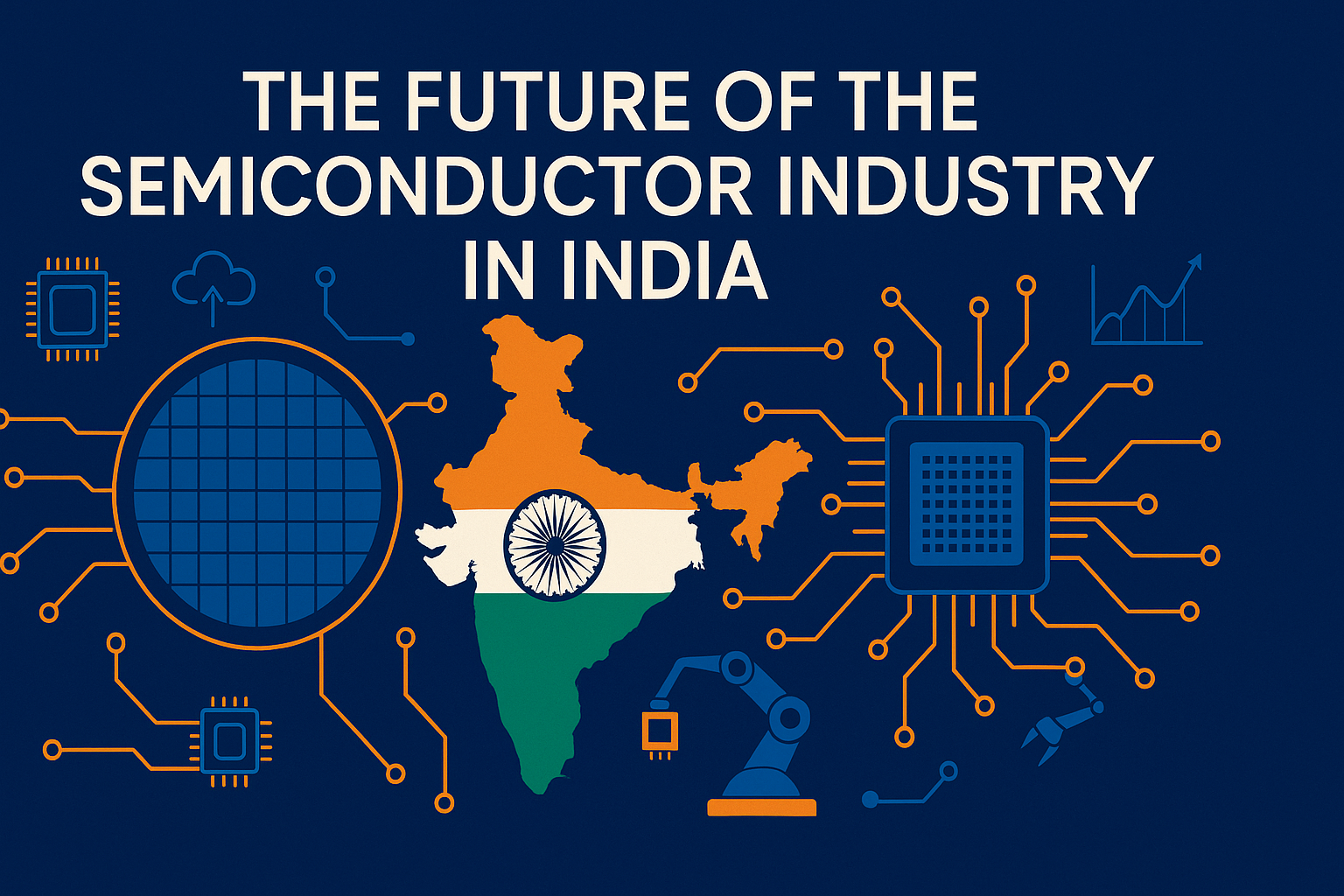
India’s semiconductor industry is on the brink of a transformative leap. As the world grapples with supply chain vulnerabilities, geopolitical realignments, and accelerating digital transformation, India is positioning itself as a global semiconductor powerhouse. Backed by robust government support, a burgeoning talent pool, and rising investor interest, the country’s semiconductor market is forecasted to surge from US$34.3 billion in 2023 to US$100.2 billion by 2032, growing at an impressive CAGR of 20.1%.
In this article, we’ll explore the current state and future prospects of India’s semiconductor sector, key companies involved, production capacity, geopolitical dynamics, and hiring trends—all within the broader context of India’s role in the global semiconductor value chain.
India’s Semiconductor Growth: A Snapshot
The Indian government has aggressively ramped up efforts to create a sustainable semiconductor ecosystem. The 2024 Union Budget increased funding by 130% to INR 690.3 million (approx. US$83.28 million) for the development of semiconductor and display manufacturing capabilities. In addition, India is leveraging its strengths in chip design and software engineering to complement its emerging capabilities in fabrication and packaging.
This drive is not just about technology—it's about economic impact. The industry is expected to create over 300,000 direct jobs by 2026, expanding into sectors like automotive, telecom, consumer electronics, and defense.
Key Government Initiatives Powering the Semiconductor Industry
1. Semicon India Program
The Semicon India Program, with a budget of INR 760 billion, is the cornerstone of India’s semiconductor aspirations. It supports companies involved in:
- Silicon semiconductor fabs
- Display fabs
- Compound semiconductors
- Photonics and sensors
- Chip packaging and design
2. India Semiconductor Mission (ISM)
Tasked with overseeing the Semicon India Program, the ISM manages end-to-end execution including:
- Application processing
- Technical and financial assessments
- Project selection
- Coordination with the Ministry of Electronics and IT (MeITY)
3. Semiconductor Fabs and Display Fabs Schemes
Both schemes offer up to 50% of the project cost as government support to build fabrication units for semiconductors and display technologies. To qualify:
- Semiconductor fabs must have a minimum INR 200 billion investment.
- Display fabs must invest at least INR 100 billion. Applicants must also show revenues of at least INR 75 billion in the last three fiscal years.
4. Design Linked Incentive (DLI) Scheme
This scheme supports semiconductor design startups and MSMEs with financial and infrastructural support. It’s focused on companies that are Indian-owned and controlled, aiming to make India a global design hub.
Current Production Landscape and Emerging Players
While India doesn’t yet have a commercial wafer fabrication plant, it is making significant strides toward building one. Foreign and domestic companies are showing growing interest in this capital-intensive sector. According to a report by India Briefing, establishing a semiconductor fabrication plant (fab) in India can cost anywhere between US$3 billion and US$7 billion.
Key foreign players evaluating or entering India’s semiconductor space include:
- Micron Technology: Announced a $2.75 billion investment in a semiconductor assembly and test facility in Gujarat.
- Foxconn: Partnered with Vedanta to propose a semiconductor fabrication unit (though the joint venture has recently been restructured).
- Tower Semiconductor (Israel): In talks for potential collaborations.
- AMD and Intel: Exploring design, R&D, and advanced packaging opportunities.
Indian firms like Tata Electronics, Vedanta, and Sahasra Semiconductors are also ramping up efforts. Tata Group has revealed plans to establish a semiconductor assembly and test unit and eventually a full-scale fab.
Geopolitical Dynamics: India’s Strategic Opportunity
Global geopolitics is playing a pivotal role in shaping India’s semiconductor journey. The US-China tech rivalry, the Russia-Ukraine conflict, and Taiwan’s geopolitical vulnerability have prompted many countries to diversify their supply chains.
India is emerging as a preferred destination for semiconductor investments due to:
- Its neutral geopolitical stance
- Democratic governance
- Strong IP protection laws
- English-speaking engineering talent pool
- Favorable regulatory framework
India has also signed bilateral and multilateral agreements with countries like Japan, South Korea, and the US to collaborate on semiconductor technology, R&D, and supply chain resilience. These partnerships will be key in helping India access critical equipment, raw materials, and technical know-how.
Employment Boom in Semiconductor Sector
The semiconductor industry in India is witnessing a massive hiring spree. As of 2024, demand is estimated between 40,000 to 50,000 skilled professionals, marking a 25-30% YoY growth. This demand spans across:
- Semiconductor design and verification
- Wafer fabrication process
- Assembly and testing
- Embedded systems
- AI and machine learning integration
India is poised to generate 800,000 to 1 million jobs in the semiconductor ecosystem in the next five years. This employment boom presents a golden opportunity for engineers, technicians, and software professionals to contribute to a sunrise industry.
Challenges and the Road Ahead
Despite the optimism, several challenges remain:
- Capital Intensity: Setting up fabs requires billions in upfront investment.
- Skill Gap: Specialized training programs are needed to bridge the demand-supply gap in technical roles.
- Technology Dependence: India still relies heavily on imports for semiconductor equipment and advanced nodes.
- Long Gestation Period: Semiconductor projects typically take 3–5 years to become operational.
However, these challenges are not insurmountable. With sustained policy support, strategic global partnerships, and focus on upskilling, India can overcome these barriers and emerge as a semiconductor manufacturing and design hub.
Final Thoughts: India’s Time to Shine in Semiconductors
India’s semiconductor industry is entering a new phase of hypergrowth—fueled by government policy, global realignments, and a vision for self-reliance. With a projected market size of US$100.2 billion by 2032, India is not just preparing to meet domestic demand but is aiming to become a reliable global supplier.
Companies, both domestic and international, have a once-in-a-lifetime opportunity to shape the foundation of India’s chip ecosystem. Whether you're an investor, engineer, policymaker, or entrepreneur—the future of semiconductors in India is not just bright, it's electrifying.
Stay tuned, because the chip story in India has just begun.



Leave a Comment